

Table of Contents
- Why Most Shoppers Miss Quality Clothing (And How to Fix It)
- How to Tell If Fabric Is Good Quality: Weight, Density, and Drape
- How to Check the Quality of a Shirt: Seams, Stitches, and Hardware
- How to Check Clothing Quality Online: Photos, Labels, and Red Flags
- Your Quality Clothing Buying Checklist for 2026
- Care, Durability, and Cost Per Wear: The Long Game
- Quality Checks by Garment Category (Tees, Hoodies, Denim)
- Conclusion: Buy Less, Check More, Wear Longer
- Frequently Asked Questions
Last Updated: October 12, 2026
Why Most Shoppers Miss Quality Clothing (And How to Fix It)
Most people judge clothing by the label, price tag, or photo, which is why so many shoppers end up disappointed.
This guide from The BLVCK BOX Collective breaks down a simple inspection routine you can run in a fitting room or on a product page, so you can separate well-made pieces from good-looking ones that fall apart after a few washes.
Price is a weak signal: a high price does not guarantee good construction, and a lower price does not always mean poor quality. What matters is what you can see and feel.
How to Tell If Fabric Is Good Quality: Weight, Density, and Drape
Fabric quality is the single biggest factor in how long a garment lasts. Weight tells you how much material you are getting, density how tightly it is woven or knit, and drape how it falls on the body.
Fabric Weight and Thickness: What the Numbers Mean
Fabric weight is measured in grams per square meter (gsm). A higher number means a heavier, denser cloth.
- Under 150 gsm: Light and thin. Fine for summer basics, but prone to showing wear.
- 150-250 gsm: Mid-weight. The standard range for everyday tees.
- 250-350 gsm: Heavyweight. Holds shape well and resists stretching.
For reference, our Legend of Ohtani tee is 305 gsm, a heavyweight cotton that keeps its structure wash after wash, a number that matters more than any marketing claim.

Drape, Recovery, and Shape Retention
Drape is how fabric hangs and moves. Good fabric falls smoothly instead of clinging or ballooning.
Recovery is what happens after you stretch it. Grab a sleeve, pull it, and let go. Quality fabric snaps back. Cheap fabric stays stretched and baggy.
Check for these signs of weak fabric:
- Pilling (small fuzz balls) on the surface
- Shrinkage after the first wash
- Color that fades fast
How to Check the Quality of a Shirt: Seams, Stitches, and Hardware
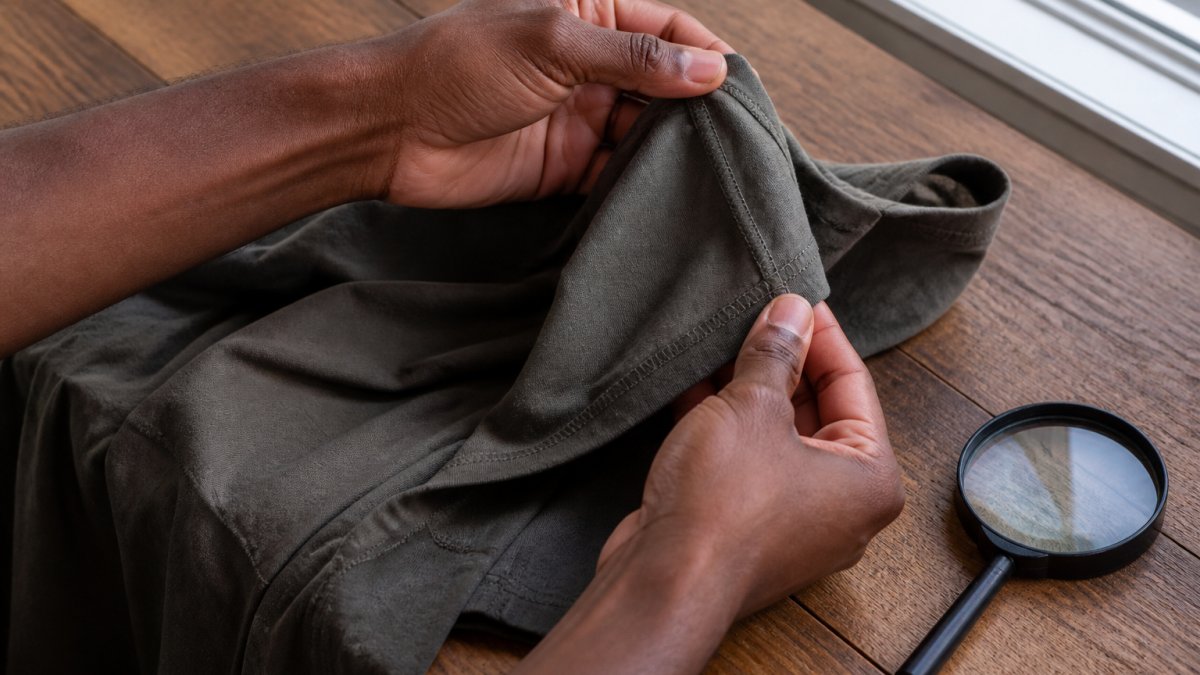
Learning how to check the quality of a shirt takes about 30 seconds. Turn it inside out and look at the seams, stitches, and hardware.
Clean, even stitching is the clearest sign of careful garment construction. Messy stitching usually means the rest of the build was rushed too.
Stitch Consistency and Seam Allowance
Stitch consistency means the stitches are the same length and tension all the way along a seam; tight and loose stitches mixed together is a red flag. Seam allowance is the extra fabric beyond the stitch line, a generous allowance gives the seam room to hold, while a skimpy one frays fast.
Watch for these construction flaws:
- Uneven seams that pucker or wave
- Loose threads hanging off the ends
- Single-stitch seams where double stitching is needed
Hems, Buttons, Zippers, and Pattern Alignment
Pattern alignment is when stripes, checks, or prints line up where two pieces meet. If the pattern jumps at the shoulder seam, the maker cut corners.
Hardware matters too. Check the buttonholes, buttons, zippers, and pocket openings:
- Buttonholes should be clean-cut, not frayed
- Buttons should feel firmly attached, not loose
- Zippers should glide without catching
How to Check Clothing Quality Online: Photos, Labels, and Red Flags
Learning how to check clothing quality online means reading what the seller shows you: zoom in on product photos, read the fiber label, and look for missing details. If a brand will not show a close-up of the stitching, that is your answer.
Reading Fiber Labels and Blends Like a Buyer, Not a Browser
Fiber content is the percentage breakdown of materials in the garment, the single most useful piece of information on a product page, and most shoppers skim it. Read it in two passes: first the dominant fiber, then the blend ratio.
Here is how the common fibers actually behave:
- 100% cotton: Breathable and soft. Gets better with age if heavyweight and combed or ring-spun. Prone to shrinkage if not pre-shrunk.
- Cotton-poly blend (roughly 50/50 to 80/20): Less wrinkling and faster drying, but can pill as the fibers wear at different rates. Common in fleece and hoodies.
- High polyester content (above 65%): Durable and colorfast, but traps heat and can feel slick. Often used to cut cost, not improve the garment.
Fabric blends mix fibers to combine properties, and the ratio tells you what you are really buying.
Judging Fabric Construction From a Product Page
Fiber content is only half the story. Fabric construction is how the yarns are arranged, and it decides how the cloth drapes, breathes, and wears.
- Knit vs. woven: Knits (tees, hoodies, sweatshirts) stretch and conform; wovens (shirts, denim, trousers) hold structure. A knit that feels stiff or a woven that feels papery is usually a construction shortcut.
- Yarn count and staple length: Longer staple fibers create smoother, stronger yarn that resists pilling. Brands that care often mention "long-staple" or "combed" cotton.
- Density: Tightly knit or woven cloth holds shape and blocks wind; loosely constructed cloth pills and stretches. In a close-up, look for visible gaps between yarns.
Photo and Listing Red Flags
Product photos are a quality signal whether the brand intends them to be or not:
- Close-ups of stitching and fabric texture. If every photo is a distant model shot, the brand is hiding the construction.
- Inside-out or detail shots. A brand proud of its seams will show them.
- Consistent color across angles. Wildly different tones suggest heavy filtering.
A Quick Online Scoring Pass
Before you add to cart, score the listing on five yes/no questions: Is the fiber content listed with percentages? Is the fabric weight stated? Are there close-up photos of stitching or fabric? Are care instructions visible? Does the brand show the inside of the garment? Four or five yes answers is a strong listing; two or fewer means you are buying on faith, and faith is expensive when returns are not free.
Your Quality Clothing Buying Checklist for 2026
Use this quality clothing buying checklist every time you shop, online or in person. It takes two minutes and saves you from returns.
The Legend of Ohtani — Heavyweight →
| Check | What to Look For | Red Flag |
|---|---|---|
| Fabric weight | 250 gsm or higher for tees and hoodies | No weight listed at all |
| Stitching | Even, tight, double-stitched at stress points | Uneven or loose threads |
| Seams | Straight with a generous allowance | Puckering or wavy lines |
| Hardware | Smooth zippers, secure buttons | Catching zips, loose buttons |
| Pattern | Lines up at seams | Pattern jumps at joins |
| Label | Clear fiber content and care instructions | Vague or missing label |
| Photos | Close-ups of stitching and fabric | Only distant model shots |
Care, Durability, and Cost Per Wear: The Long Game
Cost per wear is the real price of a garment: divide the price by how many times you actually wear it. A cheap tee you wear five times costs more per wear than a well-made one you wear fifty times.
The Four Ways Clothing Fails
Durability is four separate failure modes, each with a different cause and check.
1. Shrinkage. Natural fibers, especially cotton and wool, can shrink when heat and agitation relax the yarn.
2. Pilling. Small fuzz balls form when short fibers work loose and tangle, a fiber-length problem, not a washing problem.
3. Fading. Dye quality and fiber type decide how long color lasts.
**4.
Care Habits That Actually Extend Life
Follow the label, and treat these as defaults:
- Wash at 30°C on a gentle cycle to reduce fiber stress and shrinkage.
- Skip bleach entirely. It weakens fibers and strips dye.
- Tumble dry low, or air dry. Heat is the biggest cause of shrinkage and shape loss.
Repairability: The Quality Signal Nobody Checks
A well-made garment can be repaired. A cheap one cannot. Before you buy, ask three questions:
- Is there a seam allowance to let out or take in? A skimpy allowance means a tailor cannot alter it.
- Are the buttons sewn on with a shank or reinforced thread? Loose buttons are a five-minute fix, but a torn buttonhole is not.
- Can the zipper be replaced? A zipper set into a seam is replaceable. One fused or glued into place is not.
Repairability is also the sustainability angle most guides ignore. Extending a garment's life by even a year through repair and care cuts its environmental cost per wear dramatically. The greenest purchase is usually the one you already own, kept in rotation longer.
Running Your Own Durability Test
Run a simple durability audit on a garment you already own to calibrate your eye:
- Stretch and release a cuff, collar, and waistband. Note which recover and which stay stretched.
- Rub the fabric on the thigh and underarm areas where friction is highest. Look for pilling.
- Check color at the seams and underarms, where fading shows first.
Turning Care Into Cost Per Wear
Track one garment for a month: how many times you wore it, how it held up, and whether you would buy it again. A $40 tee you wear 80 times costs 50 cents per wear; a $15 tee you wear six times costs $2.50. The cheaper shirt was the expensive one.
Quality Checks by Garment Category (Tees, Hoodies, Denim)
Different garments fail in different places. Here is where to look for each.
Tees: Check the collar first. A thin, single-stitch collar stretches out fast. Look for a ribbed collar and double-stitched shoulder seams.
Hoodies: Check the fleece density and the ribbing at the cuffs and hem. Our BB OG Oversized Fleece Boxy Hoodie is built with ribbed pocket details and a boxy fit that holds up to layering.

Denim: Check the weight, the rivets, and the stitching at the stress points. Heavier denim lasts longer and molds to your shape over time.
Where to look for durability issues:
- Shoulder seams and sleeve fit on tees
- Cuffs, hem, and pocket openings on hoodies
- Rivets and bar-tacks on denim
Conclusion: Buy Less, Check More, Wear Longer
The real challenge is not finding clothing that looks good, but pieces that still look good after a year of wear.
At The BLVCK BOX Collective, we build for the long game. Our collections use heavyweight fabrics, clean construction, and bold, original designs you will not see on everyone else.
Shop the collection and find pieces built to last, not just to look good on day one.
Frequently Asked Questions
How to check the quality of a shirt?
Turn the shirt inside out. Check that seams are straight and even, with no loose threads or skipped stitches. Look at the hem: a double-stitched hem lasts longer than a single row. Feel the fabric weight; a 305 gsm cotton tee (like The Legend of Ohtani) feels substantial. Inspect buttons and buttonholes for secure stitching. If shopping online, zoom into photos of seams and read the fabric composition.
What are the signs of well-made clothing?
Well-made clothing has consistent stitching, clean seam finishes, and pattern alignment at shoulders and side seams. Hardware like zippers and buttons should feel solid. Fabric should recover its shape after stretching. The care label should match the fabric type. A higher price doesn't guarantee quality, but construction details are reliable indicators. Always check the inside of the garment, not just the outside.
How can you tell if fabric is good quality?
Start with fiber content: natural fibers like cotton and wool breathe and age well, while synthetic blends can pill or hold odors. Check fabric weight: a 305 gsm cotton is heavier and more durable than a 150 gsm tee. Squeeze the fabric; it should spring back without deep wrinkles. Hold it to light to check density. For online shopping, look for detailed product photos and specific fabric weight in the description.
Does a higher price mean better clothing quality?
Not always. Price is an imperfect signal. Some expensive brands cut corners on construction, while some affordable ones overdeliver. Focus on measurable details: fabric weight (gsm), stitch density, seam type, and hardware quality. A $35 heavyweight tee with 305 gsm cotton and clean seams can outperform a $70 designer tee with thin fabric and loose threads. Use price as one data point, not the deciding factor.