

Table of Contents
- Streetwear Trends for 2026: What's Actually Changing
- Oversized and Relaxed Silhouettes
- Denim, Baggy Jeans, and the Jorts Comeback
- Hoodies, Graphic Tops, and Statement Layers
- Sneakers, Caps, and Accessories That Finish the Fit
- Vintage Revival: 1980s, 1990s, Y2K, and 2010s Nostalgia
- Japanese-Inspired Streetwear and Amekaji Workwear
- Streetwear Outfit Ideas 2026: Formulas That Work
- Frequently Asked Questions
Last Updated: October 9, 2026
Streetwear Trends for 2026: What's Actually Changing
The biggest shift in streetwear trends for 2026 is that the pendulum has swung from skinny and technical back to baggy, textured, and nostalgic. At The BLVCK BOX Collective, we watch what people buy, restock, and return, and the signal is clear: silhouettes are getting wider, denim is getting looser, and the references are pulling from decades most of us lived through.

Here's the honest caveat: no single trend works for every body, budget, or climate. What follows is a working map, not a rulebook. Below, we'll show you exactly how to build outfits around each trend without replacing your whole wardrobe.
Oversized and Relaxed Silhouettes
Oversized and relaxed silhouettes are the defining shape of 2026, and they're not going anywhere this season. The trick is proportion, not just size. A boxy top needs a wider bottom to balance it, or the whole fit reads as one shapeless block.
The most common mistake is sizing up in everything at once. A common mistake is buying an XXL hoodie and XXL jeans in the same order, then wondering why the mirror looks wrong.
A practical rule: if the top is boxy, the bottom should taper slightly or sit at the waist. If the bottom is genuinely baggy, keep the top closer to a true fit.
Denim, Baggy Jeans, and the Jorts Comeback
Denim is where 2026 streetwear gets loudest. Baggy jeans, wide-leg cuts, and jorts (denim shorts cut long and loose) have moved from niche to default.
Fit matters more than wash here. A baggy jean that pools correctly at the shoe looks intentional. One that bunches at the ankle looks like a sizing error. Hem length, not waist size, is the variable most people get wrong.
For the jorts specifically, aim for a hem that lands at or just above the knee. Longer than that and you're in capri territory; shorter and you lose the relaxed proportion that makes the trend work.
Hoodies, Graphic Tops, and Statement Layers
The hoodie remains the workhorse of any streetwear wardrobe, but 2026 pushes it toward heavyweight fleece and boxy cuts rather than thin, fitted knits. A statement hoodie is now a layering piece, not just a top.
Graphic tees still matter, but the graphics have shifted. Bold, oversized prints and color-blocked panels are replacing small chest logos. If you're building a rotation, one strong graphic piece beats five forgettable ones.
This is where fit and fabric separate a good hoodie from a great one. Our BB OG Oversized Fleece Boxy Hoodie uses a dual-zip design and ribbed pocket details, and the BLVCK BOX Oversized Fleece Hoodie is built as a heavyweight everyday layer.

Sneakers, Caps, and Accessories That Finish the Fit
Footwear and accessories decide whether a streetwear outfit looks finished or half-dressed. Chunky sneakers, low-profile skate silhouettes, and retro runners are all in play for 2026.
Caps, gold chains, and small accessories do the finishing work. A plain cap in a strong color, or a single chain over a graphic tee, adds more than a stack of layered pieces.
| Accessory | Best For | Pair With | Avoid |
|---|---|---|---|
| Chunky sneakers | Baggy denim, jorts | Wide-leg pants | Slim tapered jeans |
| Retro runners | Relaxed everyday fits | Cargo pants, joggers | Formal tailoring |
| Plain cap | Casual daily wear | Graphic tees, hoodies | Overly busy prints |
| Single gold chain | Statement layering | Plain or minimal tops | Competing necklines |
Accessories are also the cheapest way to test a trend before committing to a full outfit.
Vintage Revival: 1980s, 1990s, Y2K, and 2010s Nostalgia
1980s: washed color and bold graphics. The 1980s show up through faded pigment dyes, boxy crewnecks with large chest prints, and washed-out pastels rather than neon.
1990s: baggy denim and workwear. The 1990s drive the widest cuts in the draft: loose straight-leg denim, carpenter pants, and oversized flannels layered open.
2010s: logo-heavy pieces and slim-then-baggy transitions. The 2010s resurface in all-over logo prints, jogger cuffs, and the visible transition from slim to baggy that defined the decade's street style.
How to pick your era (and why mixing all four fails)
The practical move is one era per outfit. Mixing all four at once reads as costume, not style. A 1990s baggy jean with a Y2K technical jacket can work, but only if the color palette stays tight, two neutrals and one accent, maximum.
A simple test: cover the outfit with your hand and ask which single decade the visible half reads as. If you can't answer in one word, you're mixing too many references.
Vintage as an aesthetic vs. vintage as a purchase
Most guides treat vintage as a look. It's also a sourcing decision, and that's where the practical guidance usually stops.
BB OG Oversized Fleece Boxy Hoodie →
- True vintage means a garment made in the era it references. Fit and condition vary, sizing is inconsistent, and returns are often impossible.
- Vintage-inspired means a new garment cut and dyed to evoke an era. Sizing is predictable, returns are normal, and the piece will hold up to regular wear.
- Resale and secondhand sits between the two: real older pieces, but sourced through platforms with buyer protection.
For most people building a 2026 wardrobe, vintage-inspired new pieces for the anchor items (denim, hoodies, jackets) and true vintage for accessories (caps, chains, small bags) is the lowest-risk combination. It also spreads cost, accessories are where you can test an era cheaply before committing to a full outfit.
Before buying true vintage denim, measure the inseam and waist flat and compare to a pair you already own. Era sizing runs small, and a "32" from 1996 is not a 32 today.
Japanese-Inspired Streetwear and Amekaji Workwear
Japanese-inspired streetwear and Amekaji (American casual filtered through Japanese design) remain the most technically refined corner of the market, and the one where the details actually justify the price.
What separates this lane from generic workwear is fit and finish. Utility vests and chore jackets are cut to layer over hoodies without bulk, and the fabrics tend to hold their shape over time.
The sub-styles worth knowing
"Japanese streetwear" is not one look. The three that matter most for 2026:
- Amekaji, American casual (denim, chambray, work jackets) reinterpreted with Japanese fabric and fit. The read is clean and slightly vintage, never costume.
- Boro and sashiko, visible mending and running-stitch reinforcement. In 2026 this shows up as decorative stitching on denim and jackets rather than actual repair.
- City boy, loose, layered, slightly preppy. Wide trousers, tucked shirts, and a relaxed blazer over a tee. The opposite of the boxy-hoodie silhouette, and a useful counterweight if you want variety.
What to look for in the fabric
This is where Amekaji earns its reputation. Three markers separate a considered piece from a fast-fashion copy:
- Fabric weight. Chore jackets and work shirts in this lane typically use heavier cotton than mainstream equivalents. Heavier fabric drapes instead of clinging, which is why the layering works.
- Construction details. Chain-stitch hems, reinforced bar tacks at stress points, and selvedge edges on denim are the visible tells. They also extend garment life.
- Hardware. Metal buttons, YKK-style zippers, and riveted pockets. Cheap hardware is the first thing to fail on a workwear piece.
How to layer it without looking like a uniform
The most common mistake is wearing the full workwear look head to toe. A chore jacket, utility vest, carpenter pant, and work boot together reads as a costume. Pick one workwear anchor and keep the rest of the outfit in a different register.
- Chore jacket + hoodie + baggy jean + chunky sneaker. Workwear anchor on top, streetwear volume below.
- Utility vest + graphic tee + tapered pant + retro runner. The vest carries the Amekaji signal; everything else stays modern.
- Work shirt + wide trouser + plain cap. The city-boy read, and the most wearable for warmer climates.
Where this lane fits your budget
Amekaji is the lane where cost-per-wear math favors spending more. A heavier chore jacket or selvedge denim piece typically outlasts two or three lighter equivalents, and the construction details mean it can be repaired rather than replaced. If you're allocating a 2026 wardrobe budget, this is where the anchor pieces belong, and where the trend-driven, lower-cost pieces should not.
Streetwear Outfit Ideas 2026: Formulas That Work
Streetwear outfit ideas for 2026 come down to a few repeatable formulas rather than one-off combinations. Once you have three or four that fit your body and climate, getting dressed stops being a decision.
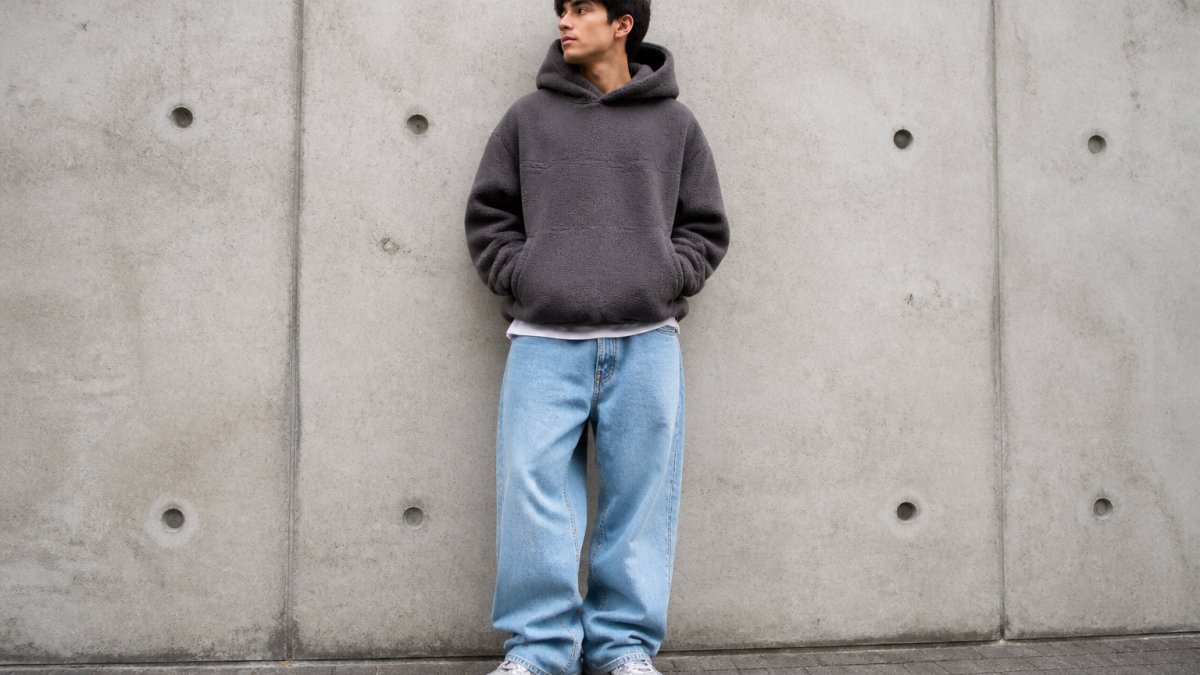
Here are four formulas that work across most body types and budgets:
- Boxy hoodie + baggy jean + chunky sneaker. The core 2026 silhouette. Keep the hoodie true to size and let the jean carry the volume.
- Graphic tee + open jersey + jorts. Built for warm weather. The jersey adds a layer without weight.
- Utility vest + heavyweight hoodie + tapered pant. Workwear layering that stays balanced.
- Plain cap + single chain + relaxed top + retro runner. Minimal, everyday, and hard to get wrong.
If you want a shortcut to formula one, our Zip-Through Boxy Fleece Hoodie is built with a roomy boxy fit and dropped shoulders for layering, and our BLVCK BOX Oversized Baseball Jersey (Black) and white version both use an oversized, drop-shoulder cut that fits formula two directly.

Frequently Asked Questions
What are the biggest streetwear trends for 2026?
The dominant streetwear trends for 2026 include oversized and relaxed silhouettes, baggy denim and jorts, heavyweight hoodies and graphic tops, retro revivals from the 1980s through the 2010s, Japanese-inspired Amekaji workwear, and utility-led layering. Accessories like caps, gold chains, and statement bags finish the look. The through-line is comfort with intention: loose fits that still read as deliberate rather than sloppy.
How do you style streetwear outfits in 2026?
Start with one oversized anchor piece, like a boxy hoodie or baggy jeans, then keep the rest of the outfit closer to your actual size so the proportions stay balanced. Add one statement layer such as a jersey or utility vest, then finish with clean sneakers and minimal accessories. The goal is one loud piece per outfit, not five competing ones.
What pieces should be in a streetwear wardrobe?
A working streetwear wardrobe essentials list includes a heavyweight oversized hoodie, one or two pairs of baggy or straight-leg jeans, a graphic tee or jersey, a layering piece like a zip-through fleece or utility vest, clean sneakers, and a cap. Neutral base colors let you rotate statement pieces without rebuilding the whole outfit each time.
How can you tell if streetwear is good quality?
Check fabric weight first: heavyweight fleece holds its shape far better than thin blends. Look at stitching density, ribbed cuffs and hems that snap back, and whether colors match the product photos. Streetwear quality materials keep structure without losing softness. Wash care labels matter too; garments that demand dry cleaning rarely survive daily wear.
Is oversized clothing still in style in 2026?
Yes. Oversized and relaxed fits remain the core silhouette for 2026, but the styling has shifted. Instead of everything being baggy at once, the current approach pairs one oversized piece with fitted or true-to-size items elsewhere. Drop-shoulder hoodies, boxy fleece, and wide-leg denim are all still central to the look.
What shoes go best with streetwear outfits?
Chunky retro runners, low-profile skate silhouettes, and clean leather sneakers all work with 2026 streetwear. Match the shoe's volume to your pants: wide-leg denim and jorts pair best with a bulkier sneaker, while tapered or straight-leg cuts suit lower-profile shoes. Keep the colorway simple if the rest of the outfit is loud.
How do you make a streetwear outfit look balanced?
Use the one-and-one rule: if the top is oversized, keep the bottom closer to your true size, and vice versa. Add a visible break at the waist with a tucked layer, a cropped jacket, or a belt. Footwear should match the volume of your pants. Balance in streetwear is about proportion control, not about wearing everything fitted.
How can you find authentic streetwear?
Buy from brands that publish real fabric weights, care instructions, and size charts with actual measurements. Look for customer photos rather than only studio shots, and check whether the brand restocks or runs limited drops with clear timelines. Authentic streetwear brands also tend to explain their design point of view, not just slap graphics on generic blanks.
The hard part of streetwear isn't knowing the trends, it's finding pieces that hold their shape after a season of wear. That's the gap The BLVCK BOX Collective was built to close. Our oversized fleece hoodies, boxy zip-through layers, and oversized baseball jerseys are designed around the relaxed silhouettes covered here, with heavyweight fabrics and distinctive thematic designs you won't see on every corner. Shop the collection and build a rotation that stays bold past the trend cycle.